Élisabeth Louise Vigée Le Brun
Appointed portraitist to Marie-Antoinette, academician at twenty-eight, an exile for twelve years through the courts of Europe, which she conquered one after another, and finally the memoirist of her own legend: Élisabeth Louise Vigée Le Brun (Paris, 1755 – Paris, 1842) built, in a world that refused women painters almost everything, one of the great careers of her century. She herself reckoned, at the end of her life, 660 portraits and some 200 landscapes.
Key facts
- Born
- 16 April 1755 in Paris, daughter of the pastellist Louis Vigée
- Died
- 30 March 1842 in Paris, aged 86
- Marriage
- 1776, to the art dealer Jean-Baptiste-Pierre Le Brun
- The queen
- Some thirty portraits of Marie-Antoinette from 1778 onwards
- Académie royale
- Received 31 May 1783, one of only four women admitted
- Exile
- 1789–1802: Italy, Vienna, Saint Petersburg, Berlin; then London 1803–1805
- Memoirs
- Souvenirs, 3 volumes, 1835–1837
The Parisian ascent
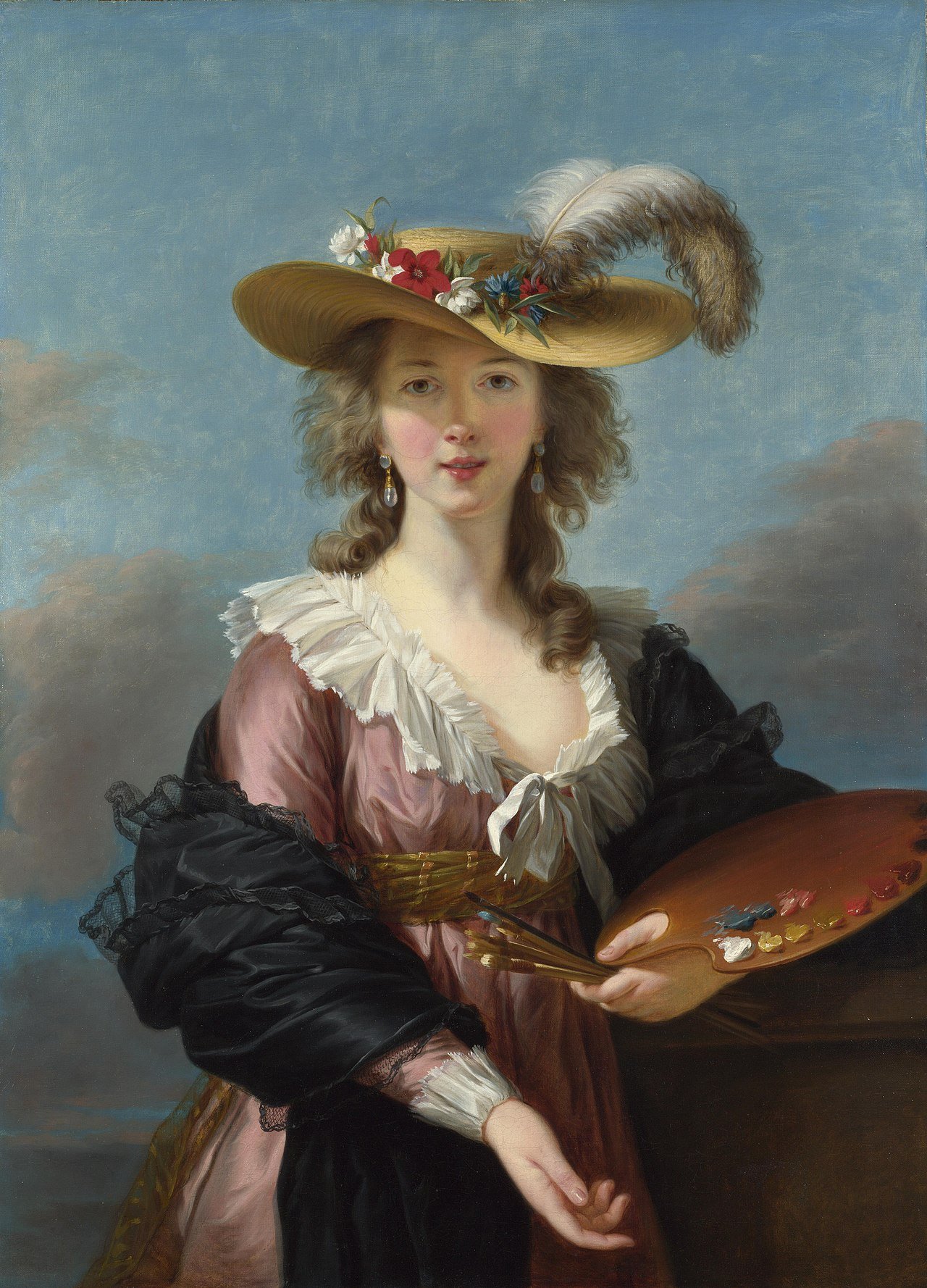
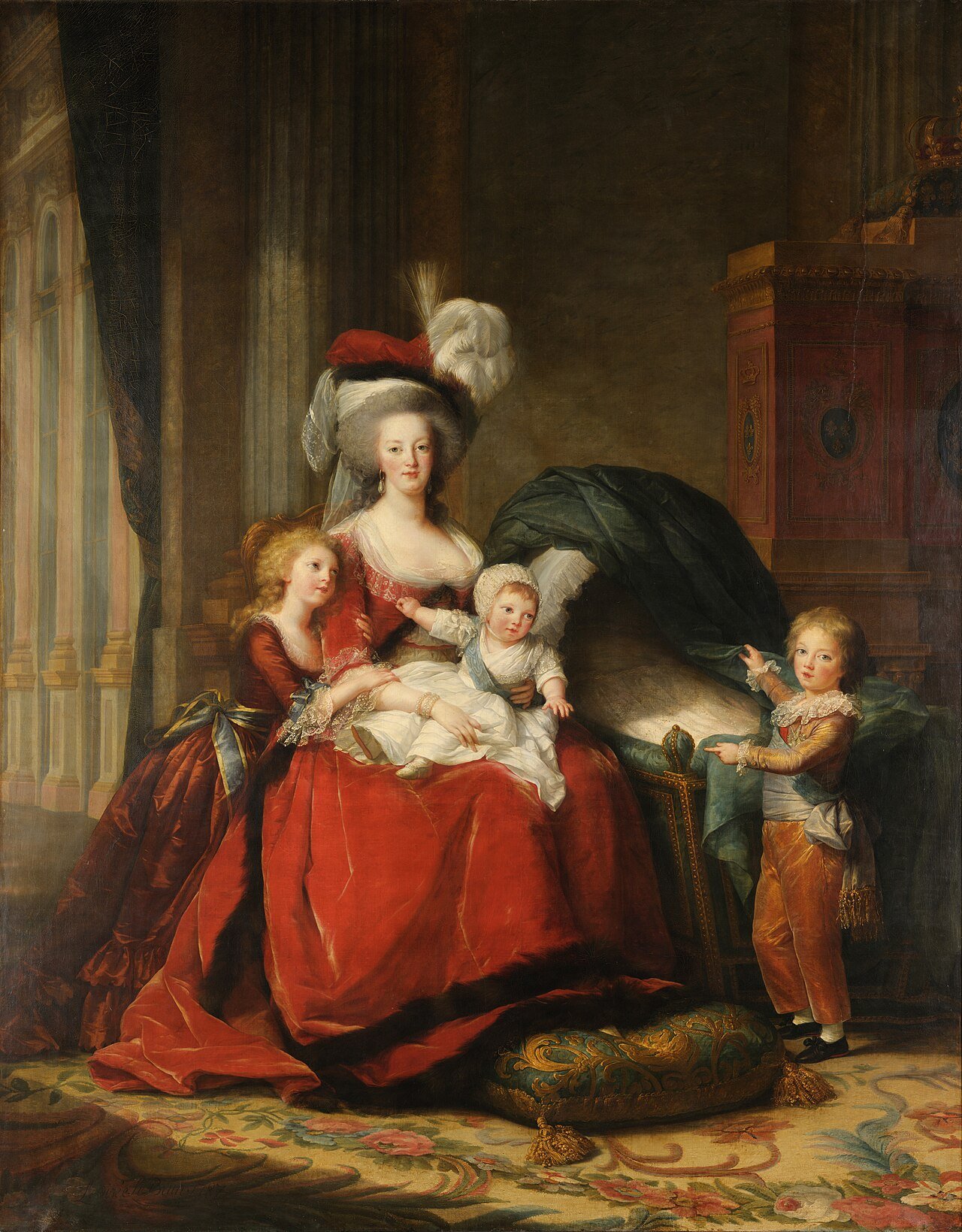
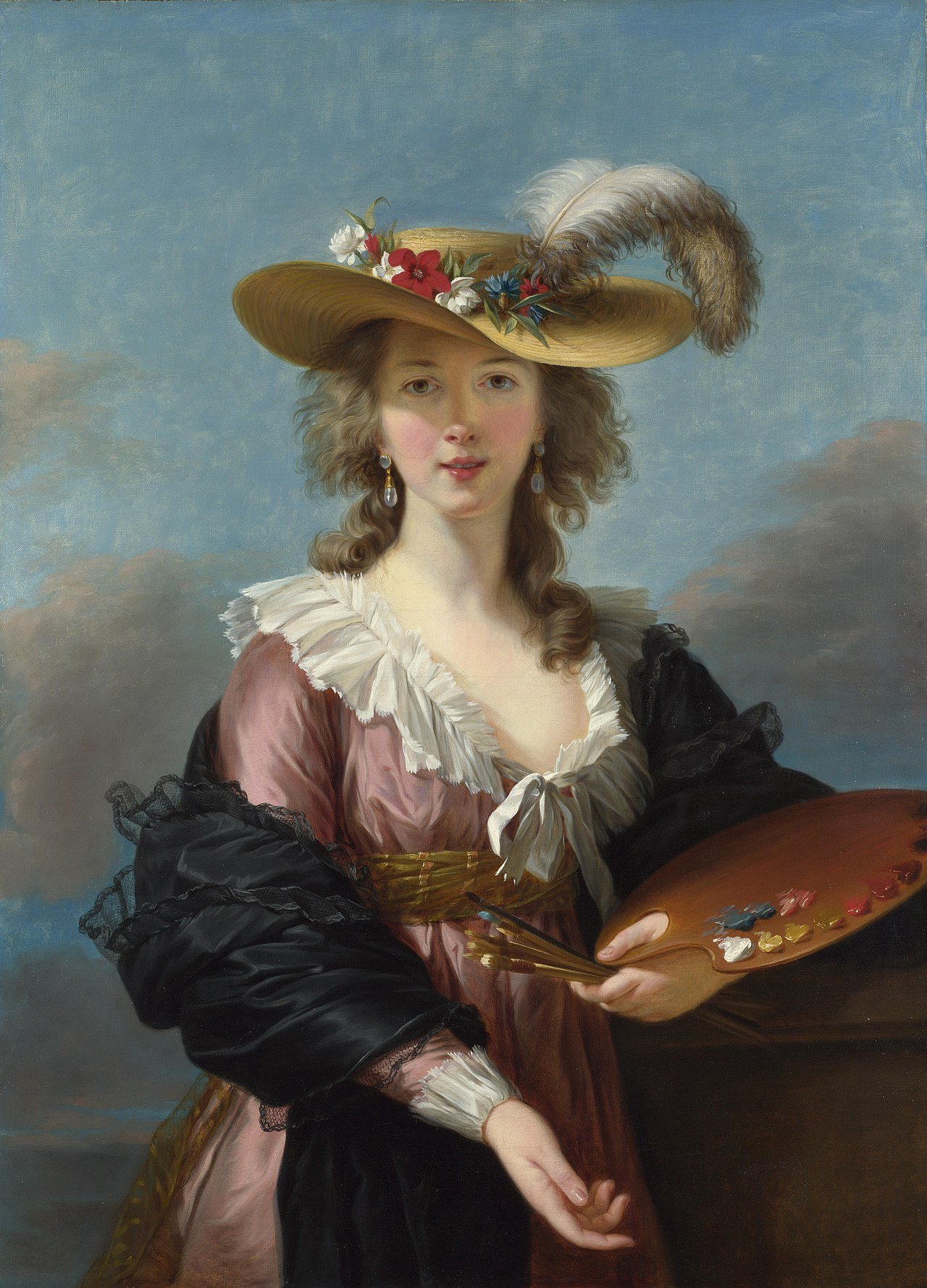
Daughter of a pastellist who died too soon, Élisabeth Vigée painted professionally from adolescence — to the point that her materials were once seized because she practised without belonging to a guild. Admitted to the Académie de Saint-Luc in 1774, married in 1776 to the dealer Le Brun (a spendthrift husband, but a precious introducer to the great collections), she became in 1778 the portraitist of the young queen. Between her and Marie-Antoinette grew a relationship of trust that produced some thirty portraits of state or intimacy: the queen "with the rose", the queen en gaulle — the muslin dress that scandalised the Salon of 1783 — and the great Marie-Antoinette and her Children (1787), a dynastic machine meant to repair the image of an already hated sovereign. In 1783, by royal intervention, the Académie royale admitted her — on the same day as her rival Adélaïde Labille-Guiard, women being capped at four. Her style joins the lesson of Rubens (her Self-portrait in a Straw Hat answers the master's Chapeau de Paille) to a new simplicity, "à l'antique", that became her signature: loosened hair, shawls, frank gazes, and those parted smiles — visible teeth! — that set the Salon talking.
Europe for a studio
On 6 October 1789, the very night the royal family was brought back from Versailles, she left Paris with her daughter Julie. There began a twelve-year exile that was also a triumphal tour: Rome and Naples (where she painted Lady Hamilton as a bacchante), Vienna, then six years in Saint Petersburg (1795–1801), where the Russian nobility competed for her brush and Catherine II received her; the academies of Saint Petersburg, Rome, Parma, Bologna and Berlin elected her. Struck off the émigré list thanks to a petition of fellow artists, she returned in 1802, spent 1803–1805 in London (where the Prince of Wales sat for her), passed through Switzerland (where she painted Madame de Staël as Corinne), and then withdrew between Paris and Louveciennes. Her Souvenirs (1835–1837), dictated with wit, remain one of the great testimonies on the Europe of the courts before and after the Revolution.
Major works
| Work | Date | Location |
|---|---|---|
| Peace Bringing Back Abundance (reception piece) | 1780 | Louvre, Paris |
| Self-portrait in a Straw Hat | 1782 | National Gallery, London |
| Marie-Antoinette en gaulle | 1783 | Hessian House Foundation, Kronberg |
| Marie-Antoinette with the Rose | 1783 | Palace of Versailles |
| Marie-Antoinette and her Children | 1787 | Palace of Versailles |
| Self-portrait with her Daughter Julie ("à l'antique") | 1786 | Louvre, Paris |
| Self-portrait with her Daughter Julie ("à la grecque") | 1789 | Louvre, Paris |
| Portrait of Hubert Robert | 1788 | Louvre, Paris |
| Lady Hamilton as a Bacchante | c. 1790–1792 | Lady Lever Art Gallery, Port Sunlight |
| Self-portrait (painted for the Uffizi) | 1790 | Uffizi Gallery, Florence |
| Madame Grand (later Princesse de Talleyrand) | 1783 | Metropolitan Museum of Art, New York |
| Countess Golovina | c. 1797–1800 | Barber Institute, Birmingham |
| Madame de Staël as Corinne | 1808–1809 | Musée d'art et d'histoire, Geneva |
Critical fortunes
Adored, then mocked — the label "painter of the Ancien Régime" stuck to her for generations — Vigée Le Brun has recovered her exact rank since the late twentieth century: a portraitist of the first order, comparable to her English contemporaries Reynolds and Gainsborough, and a key figure in the history of women artists. The Grand Palais retrospective (2015–2016), the first ever devoted to her in France, followed by that of the Metropolitan Museum and Ottawa (2016), sealed the revaluation.
In perspective
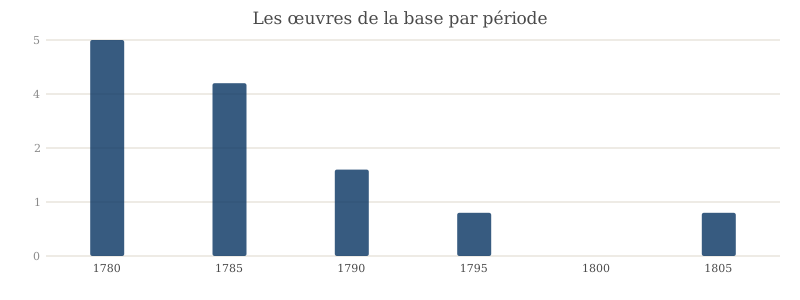
The base splits almost exactly at 1789: one Versailles half, one exile half. Few careers show a revolution in negative so legibly — same brushes, same poses, but the sitters shift from the French court to the courts of Europe.
Further reading
- Élisabeth Vigée Le Brun, Memoirs (Souvenirs, 1835–1837), various English translations.
- Joseph Baillio, Katharine Baetjer, Paul Lang, Vigée Le Brun, exhibition catalogue, Metropolitan Museum of Art, New York, 2016.
- Geneviève Haroche-Bouzinac, Louise Élisabeth Vigée Le Brun. Histoire d'un regard, Paris, Flammarion, 2011 (in French).