Sir Joshua Reynolds
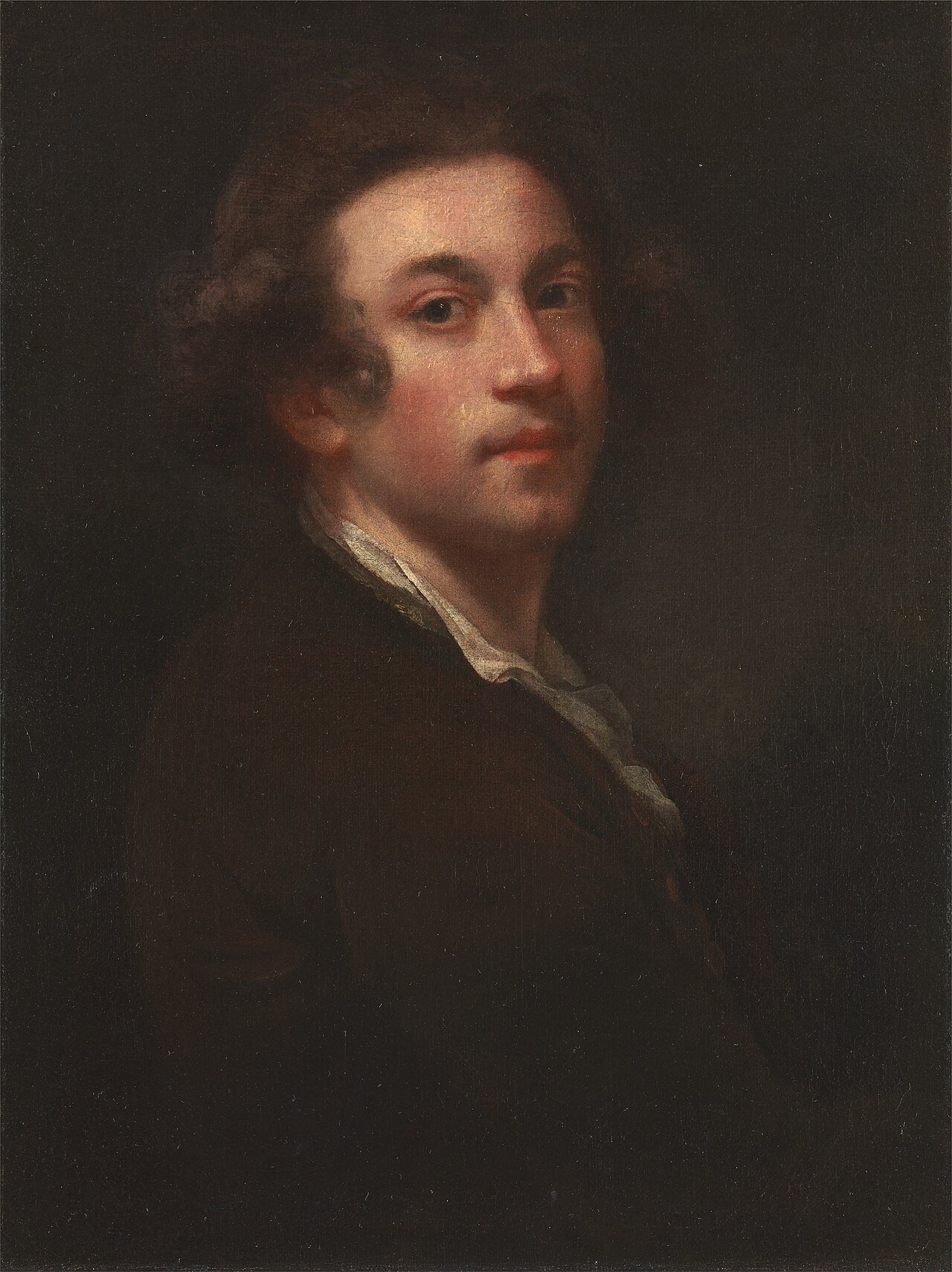
A Devon schoolmaster's son who became the most honoured painter of his age, Joshua Reynolds (Plympton, 1723 – London, 1792) gave England what it lacked: a school of painting, an academy to embody it, and a doctrine — the "Grand Manner" — to raise the portrait, the only genre his clientele would pay for, to the dignity of history painting.
Key facts
- Born
- 16 July 1723 at Plympton (Devon)
- Died
- 23 February 1792 in London; buried in St Paul's Cathedral
- Training
- Apprenticed to the portraitist Thomas Hudson; Italy 1749–1752, above all Rome
- Royal Academy
- Founder and first president, 1768; knighted 1769
- Doctrine
- Fifteen Discourses on Art delivered at the Academy, 1769–1790
- Output
- Some 2,000 portraits; Principal Painter to the King, 1784
- Circle
- Founded the Literary Club with Samuel Johnson (1764); friend of Burke, Garrick, Goldsmith
From Plympton to Leicester Fields
Trained under the fashionable portraitist Thomas Hudson, Reynolds made the decisive journey: three years in Italy (1749–1752), spent less in copying than in understanding — Michelangelo, whom he would venerate to his last Discourse, Raphael, and the Venetians whose shadows he scrutinised. (It was in the Vatican, the story goes, that he caught the deafness that gave him the ear trumpet, famous accessory of his self-portraits.) Established in London, he quickly imposed a new kind of portrait: the Commodore Keppel (1752–1753), striding along the shore in the pose of the Apollo Belvedere, caused a sensation — the contemporary sitter elevated by the antique quotation. Soon at the head of the largest studio in London — up to a hundred and fifty sitters a year, assistants for the draperies — he kept open table, founded the Literary Club with Samuel Johnson (1764), and became the social and intellectual centre of English painting.
The Royal Academy and the Discourses
When George III founded the Royal Academy in 1768, Reynolds was its inevitable president; he was knighted the following year. For more than twenty years he delivered at the prize-givings his fifteen Discourses on Art — the monument of English art theory. Classical doctrine in appearance: imitate the masters, aim at "general beauty" rather than particular accident, respect the hierarchy of the genres. But a supple doctrine, nourished by Locke and empiricism: taste is educated by experience, genius is labour, and the last Discourse (1790) closes on the name of Michelangelo, the sublime exception that exceeds the rules. In practice Reynolds himself never stopped negotiating between the Grand Manner and the market: his "historiated" portraits — Mrs Siddons as the Tragic Muse, Three Ladies Adorning a Term of Hymen — are precisely that inspired compromise, in which duchesses and actresses become allegories without ceasing to be likenesses. His rival Gainsborough, perhaps more gifted, certainly more natural, had neither his doctrine nor his empire.
Major works
| Work | Date | Location |
|---|---|---|
| Commodore Augustus Keppel | 1752–1753 | National Maritime Museum, Greenwich |
| Nelly O'Brien | c. 1762–1764 | Wallace Collection, London |
| Three Ladies Adorning a Term of Hymen (the Montgomery sisters) | 1773 | Tate Britain, London |
| Lady Cockburn and her Three Eldest Sons | 1773 | National Gallery, London |
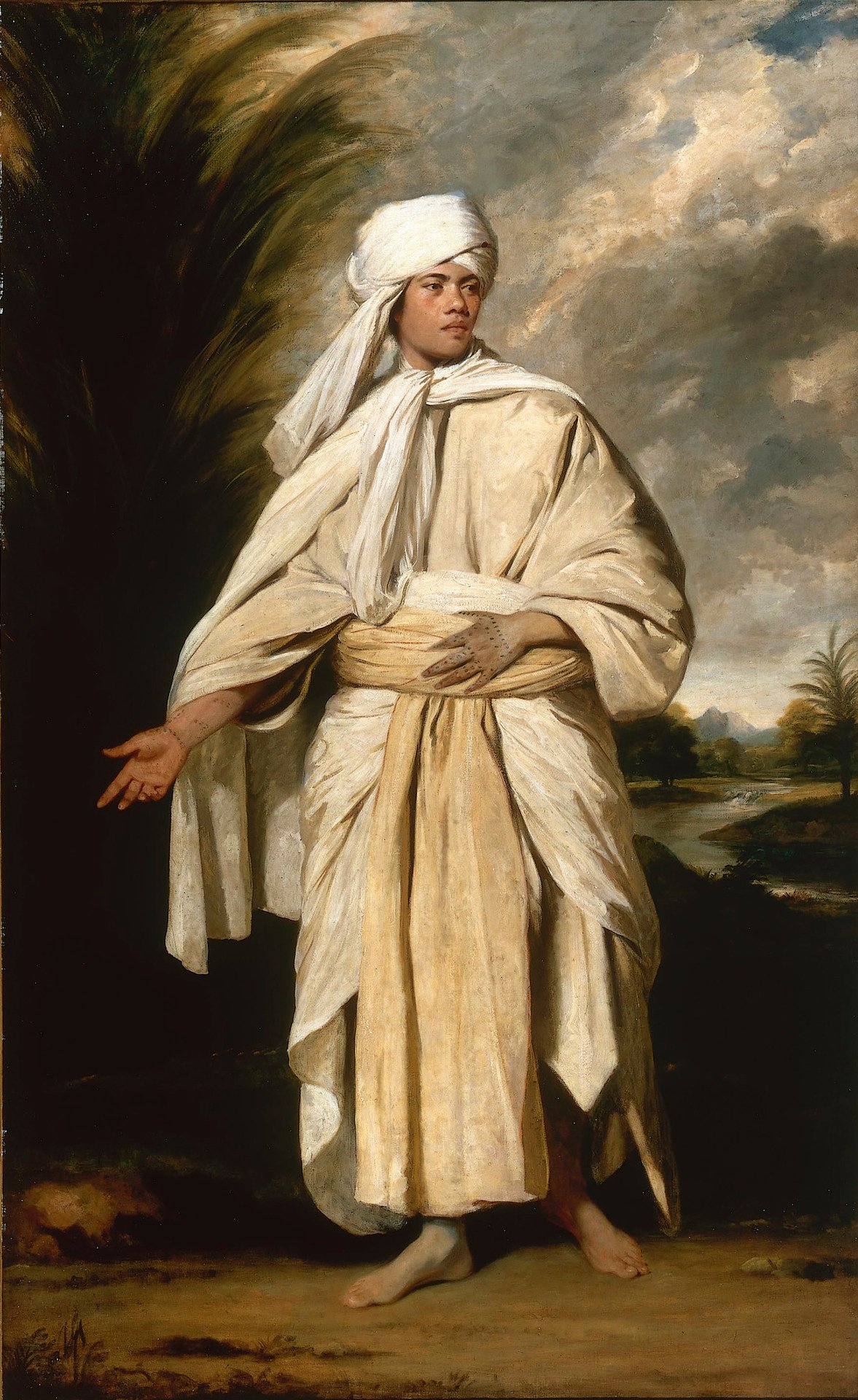
| Portrait of Mai (Omai) | c. 1776 | Jointly acquired by the National Portrait Gallery and the Getty, 2023 |
| Georgiana, Duchess of Devonshire, and her Daughter | 1784 | Chatsworth House |
| Mrs Siddons as the Tragic Muse | 1784 | Huntington Library, San Marino |
| Colonel Tarleton | 1782 | National Gallery, London |
| Master Hare | 1788–1789 | Louvre, Paris |
| The Age of Innocence | c. 1788 | Tate Britain, London |
| Self-portrait as a Doctor of Oxford | c. 1780 | Royal Academy, London |
Afterlife
He died laden with honours — Burke wrote his eulogy, three dukes bore his coffin to St Paul's — and for a century Reynolds remained the revered founder against whom one had to rebel: Blake covered his Discourses with furious annotations ("This Man was Hired to Depress Art"); Ruskin and the Pre-Raphaelites preferred Gothic sincerity. But the English school of portraiture — Lawrence, and the whole society portrait down to Sargent — descends from him, and the Discourses, admired by Constable and Delacroix alike, remain the most readable of the classical treatises: the work of a painter who thought, and of a thinker who knew what painting means.
In perspective
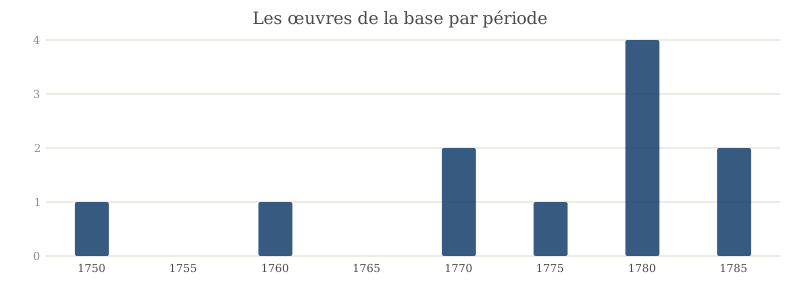
The 1770s–1780s plateau matches the Royal Academy years: Reynolds painted most while legislating on painting. The base captures the man's ambivalence — the theorist of the Grand Manner was also portraiture's industrialist, at a hundred and fifty sitters a year.
Further reading
- Joshua Reynolds, Discourses on Art (1769–1790), ed. Robert R. Wark, Yale University Press, 1975.
- David Mannings, Sir Joshua Reynolds: A Complete Catalogue of his Paintings, 2 vols., New Haven, Yale University Press, 2000.
- Ian McIntyre, Joshua Reynolds: The Life and Times of the First President of the Royal Academy, London, Allen Lane, 2003.